


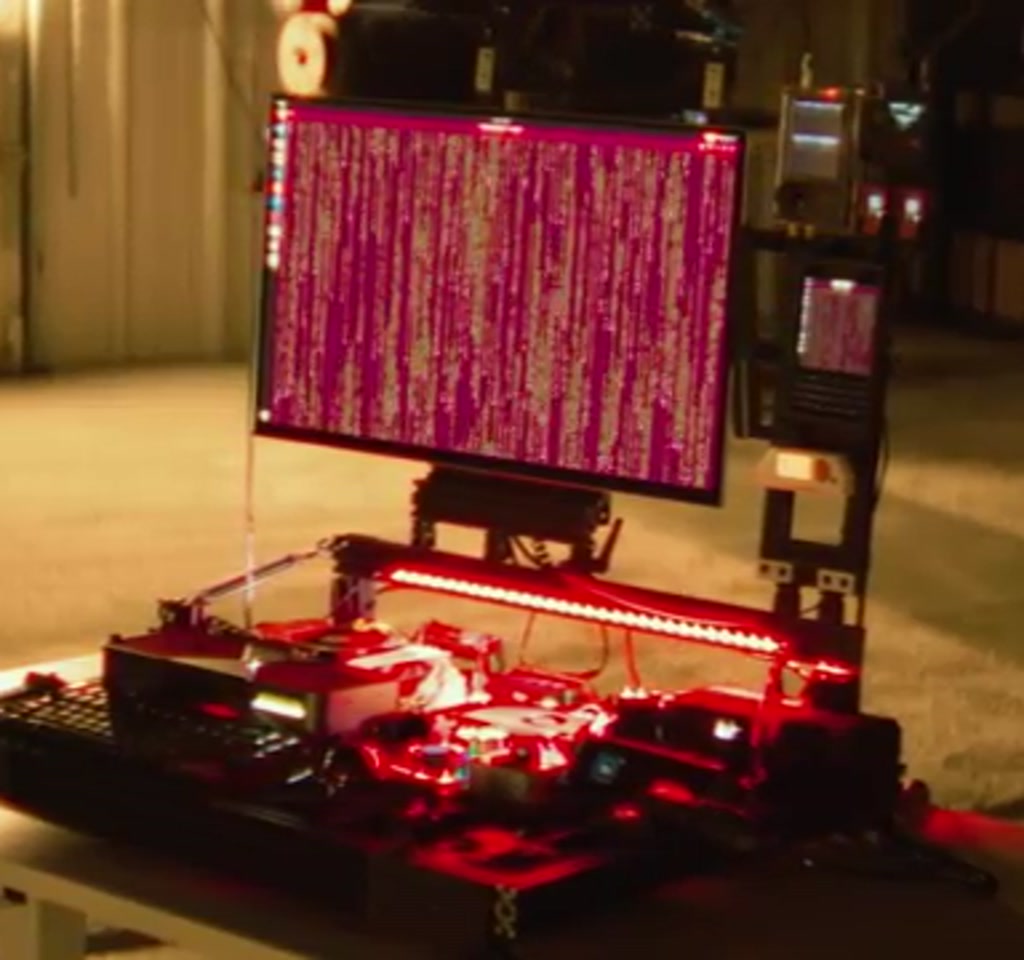
The claim here is blunt: this is the most powerful cyberdeck in the world. That promise hooks you because cyberdecks promise something that laptops do not, a fully custom portable computer built around a maker’s intent rather than mass market compromise.
The real significance here is not the headline CPU or the biggest display. What actually determines whether a cyberdeck matters is the power system, the ergonomics, and the boundaries you accept for portability. In other words, specs are attention-grabbing, but power delivery and scope creep are the story you need to understand.
That insight comes early because the maker who built this device discovered the same truth repeatedly: add more capability and you also add more weight, more thermal load, and more time spent solving the next new problem. The device in question threads together single-board computers, a full x86 rig, custom 3D-printed mounts, torque hinges, and a high-output power bank to keep everything running.
What becomes obvious when you look closer is not just clever fabrication but the tradeoffs that define a cyberdeck’s usefulness. This article unpacks those choices, explains where constraints become decisive, and shows why the pursuit of the ultimate portable machine often becomes a task of managing diminishing returns.
What A Cyberdeck Actually Is
A cyberdeck is not a product category created by a single company. It is a design philosophy: a portable, personalized computer that brings together display, input, battery, and the I O you need for the project at hand. The maker in the transcript describes it as a perpetuity dongle, which is a useful shorthand for a device meant to consolidate dongles and peripherals into one coherent unit.
Unlike a laptop, a cyberdeck usually exposes low-level I/O, like a 40-pin GPIO header on single-board computers, and accepts hats and modules for things such as motion input or local machine learning acceleration. That is where cyberdecks become more like toolboxes and less like consumer devices.
Design And Iteration: From Scissors To 3D Precision
The path from rough prototype to polished build in this project was iterative. Early versions were hand-measured and hacked together. Later, the maker moved to 3D modeling and used released step files for a Keychron keyboard to make bolt-on attachments that slot into the existing threads.
That shift is instructive. Choosing to extend bolt holes and design around existing threaded inserts turned alignment from guesswork into repeatable geometry. Heat-set threaded inserts and torque hinges let panels mount flush and hold in position, which means the deck can feel like a machine rather than a fragile prototype.
Attachment As A Design Pattern
Designing attachments rather than replacing entire subassemblies speeds iteration. The maker used 3D-printed mounts for batteries, single-board computers like an Orange Pi, and storage for a touchpad so components become modular rather than bespoke every time.
Hinges And Ergonomics
Small details matter. Torque hinges that hold their angle change how you interact with the deck for long sessions, and they let a larger display behave as a portable monitor without collapsing under its own weight. Those tactile choices convert a cool object into a usable tool.
Architecture Choices And The Dual System
One of the core decisions was architecture. The maker asks the familiar maker question: go ARM for efficiency, or x86 for raw compatibility and power? The answer chosen here is both. A Lattepanda Sigma provides a lower-power desktop-like option, while an Intel x86 CPU supplies full desktop-class performance, both connected to the same screen via a KVM.
That choice creates a primary tradeoff: versatility at the cost of complexity and power. Running a full x86 chip alongside a low-power board means cooling, power delivery, and thermal headroom must all be handled carefully.
ARM Vs x86 Compared To Alternatives
Choosing ARM or x86 is less about which is objectively better and more about use case. ARM boards excel at low-power tasks and long uptime; x86 brings compatibility with full desktop software. Combining both increases capability but multiplies constraints around heat, drivers, and battery draw.
Practical Architecture Implication
If you need native desktop apps, x86 will be more straightforward. If you want long unattended runs or specialized accelerators, ARM and single-board computers are compelling. The build’s dual approach is an explicit attempt to have both, which forces design compromises downstream.
Powering A Portable Desktop
Power delivery is where the project goes from interesting to difficult. To be a true cyberdeck you need mobility. Mobile means batteries, and batteries mean limits. The maker used an Anker Prime power bank as the backbone, and that choice is revealing.
Powering a portable desktop means balancing wattage, runtime, and weight. High-output banks enable sustained loads but add mass; DC-to-AC conversion and high-refresh displays raise consumption. The Anker Prime’s 140-watt power delivery lets the build run beyond typical single-board constraints, but it also highlights the central tradeoff.
Why Power Delivery Is The Real Problem
Most single board computer projects stall not because the processor is too weak but because the battery cannot sustain the required wattage. In this build, the Anker Prime supplied 140 watts of power delivery, and that allowed sustained loads the other batteries could not maintain. The Lattepanda was known to shut off under load until the Anker became the dedicated solution.
Quantified Limits: Wattage And Runtime
Numbers from the build give practical scale. The Anker Prime provides 140-watt power delivery, and it reportedly charges a phone to 100 percent in under 30 minutes. The included charging base reaches 50 percent in about 21 minutes and can reduce that to roughly 13 minutes with dual input, up to a stated 250-watt input capability. Those are real capabilities, but they come with consequences.
The consequence is weight and runtime. With a full 27-inch display, a DC-to-AC converter for the monitor, and a DC UPS for peripherals, the system starts to behave more like a portable desktop than a pocketable device. Power draw becomes noticeable over a full workday, and in practice runtime tends to fall into hours rather than all day unless you add more battery capacity which increases mass and cost.
The real limit of a cyberdeck is not the CPU; it is the battery and the willingness to carry the consequences.
Tools, Radios, And The Hacker Toolkit
Where cyberdecks show their maker focus is in the accessory selection. This build includes radio tools that can receive, capture, replay, and transmit frequencies, an ESP32 for infrared and radio tasks, a Seed Studios Meshtastic module for off-grid messaging, and a Flipper Zero for near-field interactions and BadUSB emulation.
Those capabilities highlight a constraint that is not technical so much as legal and ethical. The maker jokes there is a button combo that brings the FBI, which is a hyperbolic way of admitting that some functionality crosses legal boundaries if misused. That means deployment questions become part of every design decision.
The Scope Creep Question: Can The Ultimate Ever Be Finished?
Scope creep is the emotional motor of this story. Each added sensor, knob, or redundancy creates the argument for another addition. The maker describes a relentless hunger for more RAM, more displays, more capabilities, and refers to it as pride and the search for that one more doohickey.
That creates a second class of constraints. Time and money. Costs for components, adapters, and batteries tend to scale into the hundreds or low thousands of dollars as a build moves from experimental to robust, and labor time grows nonlinearly with complexity. Iteration cycles that were hours on early prototypes become days or weeks for integrated multi-architecture systems.
What this means in practice is a boundary for most builders. A simple single-board cyberdeck can be achieved for a modest sum and a weekend of work. Building a 27-inch, dual-CPU, multi-UPS system with capture hardware pushes you into a different class of project, one that requires both a workshop and a supply chain for parts.
Scope Creep Versus Purpose
Cultural forces are at play: cyberdecks are a rebellion against generic computing and a statement about what the builder values. That rebellion can drift into accumulation unless purpose is chosen. The open question is which compromises a maker is willing to accept, and that tension informs every subsequent design choice.
Practical Takeaways And What Comes Next
There are two clear constraints that will shape the next generation of cyberdecks. First, power delivery and runtime. Until battery energy density improves markedly, the most powerful portable rigs will remain a tradeoff between runtime and weight. Second, diminishing returns on complexity. Each added subsystem produces integration costs that are often larger than the additional utility gained.
What becomes interesting is how these tensions will be resolved. Will modular standards let you snap in a high-performance compute module only when needed, keeping the everyday weight low? Will power banks gain more consistent high-wattage outputs while shrinking in mass? Those developments would change the shape of what is possible, but the timeline and outcome remain uncertain.
Who This Is For And Who This Is Not For
Who This Is For: Makers who value control, modularity, and extensibility; users who accept weight and complexity for expanded capabilities; hobbyists with access to a workshop and parts supply chains. Those who want to tinker, adapt peripherals, and prioritize function over portability will find meaning here.
Who This Is Not For: People seeking a pocketable daily driver, buyers who want turnkey reliability without maintenance, or those unwilling to accept the costs in weight, thermal management, and runtime. If you need a lightweight all-day laptop experience, a large dual-CPU cyberdeck is likely the wrong path.
FAQ About Cyberdecks
What Is A Cyberdeck?
A cyberdeck is a maker-built, portable computer that integrates display, input, battery, and exposed I O to support modular attachments and project-specific tools. It emphasizes customization over mass market uniformity.
How Does Power Delivery Affect Runtime?
Power delivery determines how long components can run at sustained loads. High wattage output like the Anker Prime’s 140W PD supports heavier hardware but increases mass and complexity; runtime typically falls into hours for high power builds.
Is A Dual CPU Approach Worth The Extra Complexity?
It depends on your needs. Dual systems offer compatibility and efficiency but add cooling, power, and integration costs. The maker chose both ARM and x86 to cover more use cases, accepting the additional tradeoffs.
Can You Make A Cyberdeck That Is Truly Portable?
You can make smaller, more portable cyberdecks using single-board computers and modest displays. A 27-inch, dual-CPU rig shifts the project toward portable desktop territory and sacrifices pocketability for capability.
Does The Build Require Specialized Tools?
Moving from hacksaw prototypes to robust assemblies benefits from 3D modeling, printed mounts, heat-set threaded inserts, and torque hinges. A basic single-board cyberdeck can be done with minimal tools, but high-end builds need a workshop.
What Are The Legal Or Ethical Concerns?
Some accessory functionality, like radio transmitters or BadUSB emulation, can cross legal or ethical lines if misused. Makers should consider local laws and responsible use when integrating such tools.
How Much Does A Build Like This Cost?
Costs vary widely. Simple single-board builds can be modest; a 27-inch, dual-CPU system with capture hardware and high-capacity batteries typically moves into the hundreds or low thousands of dollars range once parts and labor are counted.
Where Should I Follow Developments In Modular Portable Computing?
Follow maker communities and coverage of modular computing, battery tech, and thermal design trends. Bit Rebels and dedicated maker forums document the evolving tools and standards that shape future cyberdecks.
All of this leaves a final thought that is not a summary but a question: if the ultimate cyberdeck is defined by desire rather than necessity, what will settle that desire one day, and what will it take to make the next generation not just more powerful but more purposeful?
COMMENTS