


The moment a large language model answers a question or an image generator paints a scene, a physical machine somewhere springs into action. For now that machine is almost always on Earth, pulling power from grids, drawing cooling water, and sitting inside buildings that need land and permits.
The real significance of moving compute into orbit is not simply about novelty or spectacle. What actually determines whether this matters is a shift in who pays for energy and where waste heat is rejected. Space offers near-limitless solar power and a way to escape terrestrial land and water constraints, but it also creates new constraints that reshape the economic and technical calculus.
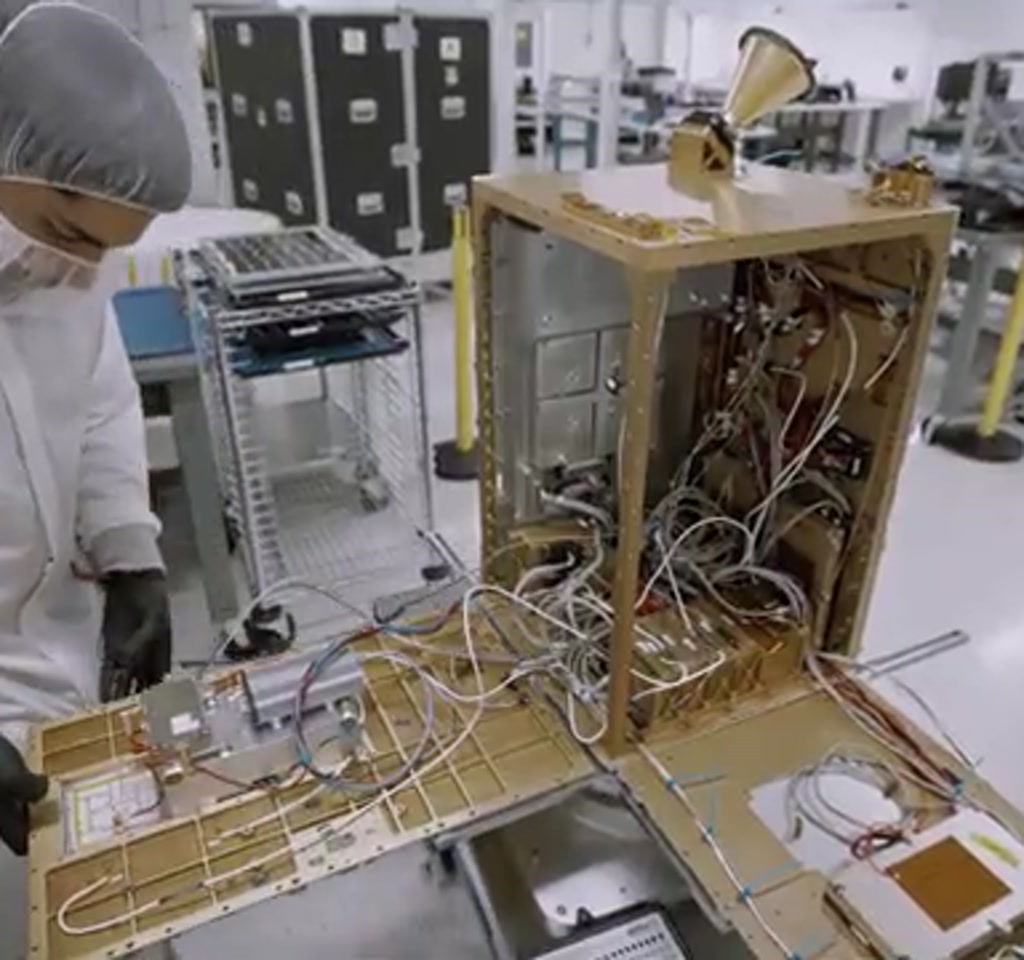
StarCloud’s late 2025 launch of StarCloud One, carrying an Nvidia H100 processor into orbit, proved a single, striking point: state-of-the-art AI chips can run in space. A machine only the size of a small fridge now orbits the planet and illustrates a larger ambition, not a miniature triumph. The vision is a planetary-scale computing layer above Earth, capable of absorbing the accelerating compute demand of the next decade.
What becomes obvious when you look closer is that orbital compute is a systems problem, not a single innovation. Laser links, foldable solar arrays, radiation shielding, propulsion for collision avoidance, and radiators to dump heat must all work together.
The part that changes how this should be understood is that two tradeoffs will decide whether space data centers remain an intriguing prototype or become infrastructure: launch economics and thermal power management.
Why Earth Is Hitting An Energy Wall
Terrestrial data centers are already consuming huge amounts of electricity and water. Forecasts cited in public discussions project that electricity use for data centers could double by 2030 and that by 2050 data center demand may represent about a tenth of global electricity consumption. Those are order-of-magnitude signals that the industry faces an energy boundary rather than a minor scaling challenge.
To put that boundary in practical terms, some estimates suggest North America will need an additional 50 to 100 gigawatts of new capacity for data centers within a handful of years. One nuclear power plant produces roughly one gigawatt, so that range is equivalent to building tens of new nuclear plants just to keep pace with near-term demand. That is a scale problem and a permitting problem as much as an engineering problem.
What Space Data Centers Are And Why They Matter
Space data centers are satellites or orbital platforms that host processors and supporting systems to run computation off Earth. They pair large solar arrays with radiators and optical links to provide power, cooling, and communications, shifting some portion of compute demand away from terrestrial grids and water supplies.
How Space Data Centers Work Today
There are prototypes and pilot projects rather than fully operational orbital data centers. StarCloud One is a prototype satellite that carries a high end AI GPU into orbit and demonstrates that commercial chips can operate in the space environment when engineered for thermal control and radiation tolerance.
In the envisioned architecture, a user prompt on Earth is beamed to a satellite or a cluster of satellites via high-bandwidth optical links. Those satellites, powered by very large solar arrays, perform computation on-board and then return results to the ground with millisecond-level latency for certain orbits and link geometries.
Companies such as Transcelestial emphasize free-space laser communication as the connective tissue, offering bandwidth advantages of over a thousand times compared with legacy radio-frequency links in some comparisons.
Engineering Challenges And Tradeoffs
Space solves some problems and creates new ones. The compelling constraints are practical and quantifiable. Two in particular deserve constant attention.
Launch Economics And The Cost Per Kilo
Getting mass to orbit remains expensive, even with reusable rockets. Industry commentary has centered on per-kilo costs as the defining barrier. Current break-even economics for some orbital projects were cited at near $500 per kilogram. SpaceX positions Starship as a game changer with target launch costs in the range of $10 to $20 per kilogram if full reusability and operations targets are met.
Those numbers have direct implications. Shipping a 4 by 4 kilometer equivalent of solar array material or large radiator surfaces into orbit becomes economically meaningful only when launch cost falls by orders of magnitude compared with historical prices.
The threshold here is not vague: if launch costs stay in the hundreds of dollars per kilogram, orbital compute will be limited to specialized, high-value applications. If costs approach the tens of dollars per kilogram, mass market orbital compute becomes plausible.
Thermal Management And Heat Rejection
On Earth data centers use air, chilled water, and evaporative systems to move heat away from processors. In vacuum there is no convective cooling. Every watt consumed by a processor must ultimately be radiated as thermal infrared from a surface. That means radiators, surface area, and thermal transport all become first-class design constraints.
Quantified context helps. Modern AI accelerators can draw hundreds to a few thousand watts each under full load. Multiply that by dozens or hundreds of chips per satellite and you are dealing with kilowatts to megawatts of heat that must be radiated. Radiators have area and mass costs, and those costs feed back into launch economics and platform complexity.
Power Generation And Solar Logistics
Solar is the obvious energy source in orbit and it changes the energy supply story. Unlike terrestrial grids, sunlight is continuous in many orbits and unmetered except by the capital cost to harvest it. The tradeoff becomes the size and deployability of solar arrays.
Researchers at Nanyang Technological University are testing perovskite solar cells that can be printed as a chemical ink and then crystallized in vacuum, producing lighter and flexible panels that can be rolled for launch.
The transcript mentions envisioned arrays up to 4 by 4 kilometers for larger platforms. Deploying and pointing such large arrays reliably and surviving micrometeoroid and debris impacts are material and operational constraints that affect uptime and replacement cycles.
Another quantifiable friction is duty cycle. Solar power varies with orbital geometry and eclipse periods. Even geostationary or high-altitude constellations face shadow and thermal cycling. Battery or energy storage mass to smooth those cycles adds to launch penalty and maintenance needs. This is where power allocation becomes an economic throttle, not merely a technical detail.
Communications, Latency, And Bandwidth Considerations
Bandwidth to and from orbit is not uniform. Laser links promise dramatic improvements in raw capacity and resilience against atmospheric absorption for intersatellite links, which are largely unimpeded by weather conditions. Transcelestial and similar efforts are testing laser ground stations and intersatellite optics to create a high-bandwidth orbital mesh.
Laser links have their own operational limits. Ground-to-orbit connections still contend with clouds and line-of-sight constraints. Latency depends on orbital altitude; low Earth orbit minimizes round-trip time but increases the number of handoffs needed as satellites move across the sky. Designing a user experience where critical interactive applications rely on orbit compute rather than local compute requires a careful latency budget and redundancy model.
Collision Avoidance And Orbital Traffic
Adding tens of thousands of compute satellites is not a neutral change to the orbital environment. StarCloud has filed proposals to deploy tens of thousands of satellites and some operators imagine millions more. China has launched an initial dozen satellites toward a larger constellation plan of a few thousand. More objects in similar orbital bands increase collision risk and require propulsion systems for station keeping and collision avoidance.
NTU and industry lab work on low-power propulsion systems for small satellites addresses that constraint, but more satellites means more coordination, more policy, and higher long-term maintenance costs. The operational cadence of maneuvers, replacement launches, and debris mitigation will add predictable expense to any orbital compute strategy.
Geopolitics And Strategic Control
This is not purely a commercial story. Multiple national and private actors see obvious strategic value in orbital compute. China has taken a state-led approach to orbit processing as a precursor to larger space compute ambitions, mandating policy and funding for constellation projects. In contrast the U.S. approach so far is dominated by private entrants such as SpaceX, Blue Origin, and startups that file for spectrum and orbital slots.
Whoever builds the infrastructure first gains more than revenue. They gain leverage over routing, standards, and potentially content and access control in the next generation of networked services. That is why policy and export controls, spectrum allocation, and orbital traffic agreements are as central to this debate as engineering tradeoffs.
Space Data Centers Vs Ground Data Centers
Comparing orbital compute with terrestrial data centers clarifies tradeoffs. Ground facilities offer lower launch-free operational costs, mature cooling techniques, and easier maintenance. Space data centers offer abundant local solar power and relief from terrestrial water and land constraints but add launch, radiator mass, and orbital traffic costs. The choice is about workloads and economics.
When Orbit Makes Sense
Orbit is most plausible for workloads where on-device power supply, jurisdictional placement, or specific latency profiles favor satellites. It also suits high-value, specialized tasks that can absorb elevated capital costs while reducing recurring grid and cooling demands on Earth.
When Ground Remains Better
Bulk training, highly dense compute clusters, and workloads that demand frequent physical maintenance or upgrades will likely remain on Earth while launch and radiator economics mature. Hybrid architectures that split workloads appear the most likely near-term outcome.
Two Clear Constraints That Decide The Scale
The first constraint is economics of mass to orbit. If launch costs remain above a few hundred dollars per kilogram then orbital compute will be confined to edge filtering, specialized military and scientific workloads, and proof of concept satellites. If costs fall toward the tens of dollars per kilogram, a new class of mass market orbital infrastructure becomes viable.
The second constraint is heat rejection area and the resulting mass tradeoff. Each kilowatt of sustained computing requires radiator area and associated structure. That area is a moving part in the launch cost equation. The balance between compute density per satellite and the number of satellites in a constellation is therefore a continuous engineering choice with clear quantitative effects on total cost of ownership and latency.
Where This Fits In The Broader Technology Arc
Orbital compute is an extension of trends already reshaping infrastructure: specialization of accelerators, edge processing to reduce backhaul, and the commoditization of launch. It is not a wholesale rejection of ground-based data centers. A more likely pattern is hybridization, with latency-sensitive and heavy-throughput workloads split between terrestrial facilities and orbital clusters where the economics suit the use case.
From an editorial standpoint, the detail that stands out is how these systems rewire control over the Internet. Building compute in orbit is not merely about capacity it is about placing the physical nodes of the network in new jurisdictions and under new operational assumptions. That has implications for governance, privacy, and strategic resilience.
Who This Is For And Who This Is Not For
Best Suited For: Organizations with high-value, latency-tolerant workloads that can justify elevated capital expenditure; governments and companies seeking strategic control over compute placement; projects where local solar power and jurisdictional reasons outweigh launch penalties.
Not Suited For: Commodity cloud users, workloads that require frequent hands-on maintenance, and any operator that cannot amortize high launch and radiator costs. Until launch and radiator economics improve, many mainstream AI training and hyperscale tasks will remain more economical on Earth.
What Determines Whether This Works
The idea succeeds up to the point where two thresholds are crossed. The first is the price per kilogram to orbit, which needs to fall from hundreds toward the low tens of dollars to make mass deployment credible. The second is the ratio of radiator and solar area to compute power, which must stay within launchable mass envelopes without forcing unacceptable tradeoffs in latency or redundancy.
Other conditions include reliable laser communications at scale, sustainable manufacturing of lightweight solar and radiator materials such as perovskite cells, and an orbital traffic management regime that prevents debris cascades. Each condition is quantifiable and each will create winners and losers in the nascent space compute market.
Looking Forward
StarCloud One and other prototypes are useful because they convert theoretical questions into engineering problems with numbers attached. Those numbers are what investors, regulators, and engineers will argue about for the next decade. The real experiment is less about whether chips can run in vacuum and more about whether the integrated stack of launch, power, cooling, communications, and policy can be aligned at a price point that scales.
If the price of getting mass to orbit collapses and radiator technology improves, portions of the global compute load could move to orbit, relieving pressure on terrestrial grids and water supplies. If those thresholds remain out of reach, orbital compute will settle into niche roles as a strategic tool for specific workloads.
Either outcome would reshape expectations about where the Internet lives and who controls its physical layer. That is a long-term conversation worth watching every time a new satellite carrying computer hardware reaches orbit.
FAQ
What Is A Space Data Center?
A space data center is an orbital platform or satellite that hosts processors and support systems to run computation off Earth, combining solar power, radiators, and optical communications to perform tasks without relying on terrestrial power and cooling.
How Do Space Data Centers Get Power?
They harvest sunlight with large solar arrays. Research into lightweight perovskite cells and deployable panels aims to reduce mass and packing volume for launch, but duty cycles and eclipse periods still require energy storage solutions.
Is Latency Better Or Worse From Orbit?
Latency depends on orbital altitude. Low Earth orbit can deliver millisecond-level round-trip times for certain links, but moving satellites require more handoffs. Geostationary orbit has higher latency but steadier coverage. The right orbit depends on the application.
Can Heat Be Managed In Vacuum?
Yes, but only by radiating waste heat to space. There is no convective cooling, so radiators become essential. Radiator area and associated mass are major design and cost drivers for orbital compute platforms.
How Important Are Launch Costs?
Extremely important. Transcript commentary places break-even economics near $500 per kilogram today and suggests Starship targets of $10 to $20 per kilogram as a potential game changer. Those ranges directly affect whether mass-market orbital compute is plausible.
Will Orbital Compute Replace Ground Data Centers?
Unlikely in the near term. The more probable outcome is hybridization, where orbital clusters handle specific workloads and ground centers continue to host bulk training and heavily serviced infrastructure, unless launch and radiator economics change dramatically.
What Are The Main Risks To Scaling Space Data Centers?
The primary risks are persistent high launch costs, unfavorable radiator mass to compute ratios, orbital traffic and debris, and unresolved policy and strategic control issues. Each of these is quantifiable and affects commercial viability.
Can Anyone Build Space Data Centers?
Currently, the effort requires significant capital, regulatory approvals, and expertise in launch operations, thermal engineering, and optical communications. State actors and well-funded private entrants are the most likely early builders based on the transcript context.
Related topics: satellite internet infrastructure, reusable rockets and launch economies, perovskite solar cell research and deployable space systems.
COMMENTS