


The H1X is being presented as more than a prototype. Doroni says it is a different approach to personal flight, one that trades visible rotors and theatrical vertical climbs for ducted fans, aerodynamic wings, and a single-screen Sol AI cockpit intended to make piloting feel familiar rather than technical.
The real significance here is not that a new machine can lift off. What changes how this should be understood is the combination of aerodynamic design and an intelligent cockpit that aims to absorb complexity. If that combination works at scale, it changes the barrier to entry from a specialized pilot skill set to an everyday navigation skill, the kind people already expect from cars and modern phones.
Most people misunderstand personal eVTOLs as simply small drones with bigger claims. Doroni frames H1X as a refinement: quieter motors, contained thrust, lift from wings in forward flight, and a digital copilot that does the heavy lifting. The article that follows digs into how those choices map to real constraints, how they trade weight for safety and range, and what it will take for this class of vehicle to leave test sites and land in suburban yards.
What becomes obvious when you look closer at the H1X is that the vehicle is only half of the product. Doroni describes Sol AI as the intelligence that will let nonprofessionals guide a journey while the system manages avoidance, navigation, and aircraft health. That claim flips the familiar conversation about aircraft from mechanical control to human-centered supervision.
What Doroni Is Building
Doroni positions the H1X as a personal eVTOL designed for the average person rather than an air taxi. The company contrasts its approach with earlier prototypes that looked like human-sized drones with exposed propellers and aggressive forward tilt during acceleration. Doroni says those early lessons shaped the H1X design.
What Is The H1X
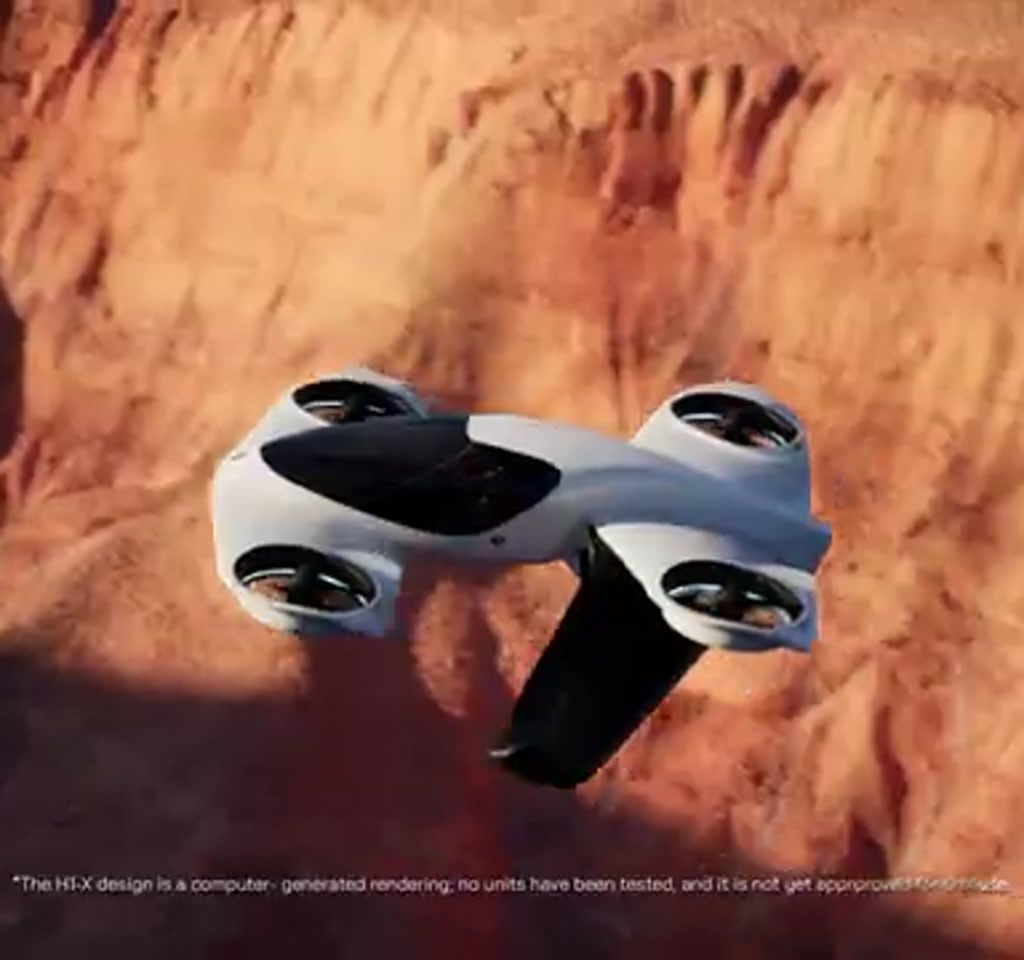
The H1X is a compact personal electric vertical takeoff and landing vehicle that combines ducted fans, fixed wings for forward lift, and a cockpit interface called Sol AI. It is presented as a point-to-point personal aircraft intended to feel familiar to nonpilots, reducing manual complexity through integrated sensors and a single-screen interface.
The vehicle on display uses ducted fans around its propulsors, conventional-style wings for lift in forward flight, and horizontal ducted fans beneath the cockpit to provide forward thrust without a large nose-up attitude. The result, Doroni claims, should be quieter operation, more contained airflow when landing, and a smoother acceleration profile that feels less disorienting to a passenger used to cars.
How The H1X Works
At a high level the H1X operates as a hybrid between rotorborne hover and wingborne cruise. Vertical lift comes from ducted propulsors; once forward speed is achieved, aerodynamic wings take over much of the lift duty. Transitioning between those flight modes is a critical operational process managed by the onboard cockpit systems.
Ducted Fans And Lift Distribution
Ducted fans enclose rotating blades to reduce exposure and redirect airflow. This containment reduces peripheral thrust and perceived noise, while concentrating downward force to improve hover efficiency. Adding ducts increases structural weight, so the design balances safety and neighborhood acceptability against reduced range and payload.
Wings And Cruise Efficiency
Fixed wings provide lift in forward flight, lowering the continuous power demand on motors over distance. That makes the H1X more energy efficient than a pure rotorcraft for trips where cruise speed dominates energy consumption. The benefit is conditional on achieving and maintaining the speeds where wings become effective.
Design That Reframes Safety And Efficiency
Ducted Fans As Protective And Efficient Elements
Doroni emphasizes that ducted fans do double duty. They reduce exposure to spinning blades, which addresses an obvious safety concern for operations that might start and stop in residential yards. The company also argues that ducts contain and redirect thrust, limiting lateral energy and concentrating downward force to reduce energy loss and thus improve range.
The detail most people miss is that ducts are not a free lunch. Added structure increases weight, and structural weight directly erodes range. The tradeoff here is safety and community acceptability versus payload and flight time, a tension that returns when we consider practical constraints.
Wings And Forward Lift Trade Energy For Efficiency
Wings are used to offload the motors at speed. Once forward motion is established, the wings provide lift so that less propulsive energy is required. This is the same logic that makes fixed-wing aircraft more efficient over distance than pure rotorcraft.
That aerodynamic choice shifts the vehicle into a hybrid flight envelope that requires sufficient forward speed to realize the benefit. It also introduces handling transitions between hover and cruise that the Sol AI will need to manage seamlessly for nonexpert users, an integration challenge that is not resolved by hardware alone.
Sol AI And The Intelligent Cockpit
Doroni calls the cockpit system Sol AI. The company explicitly took inspiration from modern electric cars where a single screen presents navigation, battery status, weather, and routing. Sol is intended to be a single point of decision for the pilot or passenger.
360 Degree Guardian And Sensor Fusion
Sol AI is described as a 360-degree guardian combining radar, lidar, and vision systems. In practice, that means continuous sensor fusion and real-time decision making to prevent collisions, route around weather and obstacles, and manage degraded systems. Doroni positions this as the digital copilot that knows where to go and what to avoid.
The moment this approach becomes fragile is when one sensor modality degrades or when the environment creates ambiguous data. Sol AI will therefore have to balance redundancy against weight and power, which are both limited. That unresolved tension is revisited when discussing energy and regulatory constraints.
Interface And Human Factors
The main flight controls, Doroni says, will be consolidated onto a single screen showing navigation, battery meter, estimated time to destination, altitude, speed, charging locations, and weather. The company intends the interface to be conversational and to act as a reliable partner in the air.
Designing an interface that nonpilots trust is an engineering and behavioral challenge as much as a software one. Trust grows from predictable behavior, transparent failure modes, and consistent fallbacks. Doroni will need to design the cockpit to show both the promise and the limits of the guidance system in ways users can intuitively understand.
Benefits And Value Proposition
H1X aims to deliver quieter, more contained personal flight that is easier for nonpilots to accept. Benefits include lower perceived noise near homes, smoother acceleration profiles, and a cockpit designed to centralize information. Those are practical advantages for adoption if they survive the realities of cost and range.
Practical Constraints That Will Decide This Future
The simplification of flight is not a single engineering achievement. It sits at the intersection of three concrete constraints: energy density and range, cost and operating economics, and regulatory and infrastructure readiness.
Energy Density And Range
Battery energy density remains the core limit for small eVTOLs. Increasing range usually requires more batteries, which add dozens of kilograms and raise energy demands in a repeating cycle. Until battery energy density improves substantially, personal eVTOL trip ranges are likely to be counted in tens of miles, not hundreds.
Cost, Infrastructure, And Operating Economics
Certification, sensors, maintenance, and production push per-unit costs high. Infrastructure such as charging hubs or vertiports and trained maintenance crews add recurring expenses. This tends to lock early personal eVTOLs into higher price points or shared ownership structures until scale reduces costs.
Regulatory And Community Acceptance
Smaller, quieter machines are easier to place near homes, but permissive regulations and local infrastructure must exist before door-to-door operations become practical. Regulatory timelines and vertiport rollouts are often measured in years, which shapes a multi year horizon for mainstream adoption beyond early enthusiasts.
H1X Compared To Other eVTOL Approaches
Comparisons matter less as marketing and more as decision factors: rotorborne hover versus wingborne cruise, exposed propellers versus ducts, and reliance on human piloting versus supervised autonomy. Doroni prioritizes contained thrust and wingborne efficiency, which changes where the vehicle is useful and what compromises are acceptable for buyers and regulators.
H1X Vs Pure Rotorcraft
Compared to machines that stay rotorborne for most of the trip, the H1X sacrifices some hover efficiency at scale in exchange for better cruise efficiency and reduced neighborhood noise. The choice favors medium-distance point-to-point trips rather than short hops in dense urban cores.
H1X Vs Large Air Taxi Models
Large air taxi designs emphasize passenger throughput and vertiport networks. Doroni frames the H1X as a personal machine that can operate from smaller sites, which shifts regulatory and infrastructure requirements but raises questions about individual ownership costs and maintenance burdens.
Traction, Timing, And Investment Signals
Doroni reports strong public interest and expressions of investment intent. State funding for eVTOL infrastructure and public flights in several cities indicate regulators and planners are exploring integration. Still, market narratives and engineering timelines often operate on different schedules, and investors should weigh visibility against technical and regulatory milestones.
Who This Is For And Who This Is Not For
Who This Is For: Early adopters with access to private landing space or membership in shared ownership schemes, planners exploring low noise air mobility, and communities willing to invest in local vertiport or charging infrastructure.
Who This Is Not For: Buyers expecting long-range cross-country travel, communities with strict noise or airspace restrictions, or anyone seeking a plug-and-play replacement for daily car commuting before regulatory and cost barriers are reduced.
Final Thoughts And The Shape Of The Near Future
Doroni’s H1X brings clarity to what matters in personal eVTOL design: contain the risks with ducts, recover efficiency with wings, and hide complexity with a single intelligent cockpit. Those engineering choices come with clear tradeoffs in weight, cost, and operational complexity. The company is betting the cockpit will be the multiplier that makes those tradeoffs acceptable to everyday users.
Whether the H1X becomes a common sight will depend on battery breakthroughs, cost reductions into the low hundreds of thousands or shared ownership economics, and a regulatory and infrastructure timeline counted in years. Those boundaries will define how quickly the promise becomes routine.
For now, Doroni has shifted the conversation from theatrical vertical drone flights to a more familiar promise: personal flight that feels like driving. That promise will be tested not only in hangars and on test ranges but in neighborhoods and policymaking rooms where the next chapter will be decided.
FAQ
What Is The Doroni H1X?
The H1X is Doroni’s personal electric vertical takeoff and landing vehicle that uses ducted fans, fixed wings, and a single cockpit interface called Sol AI to simplify flight for nonpilots.
How Does The H1X Differ From A Drone?
The H1X combines wingborne lift and ducted propulsors for quieter, more efficient cruise compared to small multirotor drones, and it targets supervised human operation rather than remote hobby flying.
What Are The Main Advantages Of Ducted Fans?
Ducted fans reduce exposure to spinning blades, help contain thrust and noise, and can improve public acceptability near homes. The tradeoff is added structural weight, which reduces range and payload.
How Far Can Personal eVTOLs Like The H1X Travel?
Range is limited by current battery energy density. For small personal eVTOLs, realistic trips are likely to be measured in tens of miles until battery technology improves substantially.
Is The Sol AI Cockpit Fully Autonomous?
Doroni describes Sol AI as a supervisory cockpit that consolidates sensors and guidance. The company frames it as a digital copilot to reduce pilot workload; exact operational autonomy and certification details are not specified in the available material.
How Much Will An H1X Cost?
Detailed pricing has not been disclosed. Early personal eVTOLs typically face high per-unit costs due to certification, sensors, and low initial production volumes, which may push prices into the high tens or hundreds of thousands unless shared models emerge.
When Will Personal eVTOLs Be Common?
Mainstream adoption depends on parallel progress in batteries, manufacturing scale to lower costs, and regulatory and infrastructure rollouts. Those developments are likely measured in multiple years rather than months.
Can H1X Operate Near Homes?
Doroni designs the H1X with quieter, contained thrust to improve neighborhood acceptability, but local regulations and infrastructure readiness will ultimately determine where and how these vehicles can operate.
COMMENTS