


Once upon a time, hearing aids were beige and bulky, something only a grandparent wore. They produced feedback and whistled awkwardly. A young person would rather, well, not hear than wear one.
But today, middle age can extend well into your 50s, and hearing problems can occur at any age. Hearing aids need a younger aesthetic. And technology has met that need, producing devices that are not only smaller but also technologically advanced, capable of addressing a variety of needs.
And if affording them is a problem, payment plans are available.
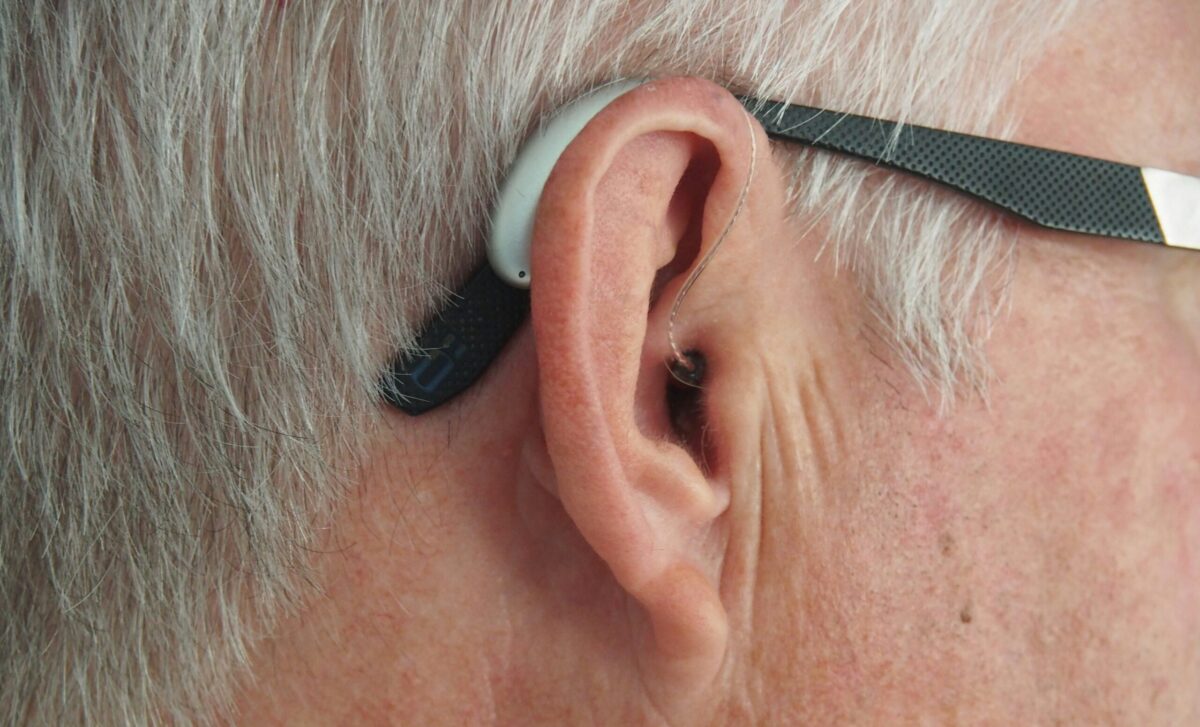
IMAGE: UNSPLASH
AI Does The Heavy Lifting
Hearing aids of the past were little more than amplifying tools. They used fixed parameters to apply a present gain adjustment and called it a day. While effective, they could not help wearers understand speech in a noisy room.
Today’s models use deep neural networks (DNN) and are trained on millions of hours of real-world audio, the same type of machine learning used for image recognition and large language models. The learning patterns that enable them to separate voices from noisy environments work similarly to the human brain. And because they learn, they get better all the time.
The results are measurable. A 2024 study published in the American Journal of Audiology found that DNN-powered noise reduction outperformed traditional fixed-parameter filtering, while a 2025 study published in Frontiers in Audiology and Otology documented significant improvements in signal-to-noise ratio and speech recognition in users with DNN-enabled devices.
Today’s Hearing Aids Are Basically Wireless Earbuds
The line between hearing aids and wireless earbuds is blurring. Modern hearing aids stream phone calls, music, GPS, TV, and podcasts, without an intermediary device or clunky wires, virtually eliminating the need to purchase earbuds for these additional tasks.
And manufacturers are taking it even further. ReSound Nexia launched in the fall of 2023 as one of the first hearing aids with Bluetooth LE audio and Auracast, and many other manufacturers are following suit.
While Bluetooth LE Audio is now shipping in flagship hearing aids from all major manufacturers, the Auracast component — a broadcast protocol that lets any compatible device, including hearing aids, tune in to a shared audio stream — is still in early rollout in venues. Frankfurt Airport switched it on in 2025, with US theaters, conference centers, and other venues following in pilot installations.
Other Modern Features
Hearing aid wearing has also gotten edgier thanks to these modern advancements:
- Sensor stacks: Starkey’s Edge AI and Genesis AI lines include fall detection features. Phonak and Oticon offer heart rate monitoring and sleep tracking through companion apps. Activity tracking is becoming standard in higher-end hearing aid models.
- Rechargeable Lithium Ion Batteries: Largely replacing zinc-air disc batteries, these batteries let wearers simply slip their hearing aid into a case for overnight charging and get a full day of streaming and use.
- Discreet Models: The look of hearing aids has changed, too, or perhaps they have disappeared completely. Modern models are often completely in-ear or sit behind the ear, looking more like a minimal tech accessory than a hearing device.
The OTC Shakeup
In the past, getting a hearing aid required a clinical visit, a prescription, and a fitting, adding considerable time and costs to the process. Then, in October 2022, the FDA established a new regulatory category, allowing adults with mild to moderate hearing loss to buy hearing aids directly from retailers without a previous doctor’s visit. This ruling transformed the hearing aid industry into more of a consumer electronics category.
Adoption was quick, and brands like Jabra, Sony, and Sennheiser were early entrants. By 2025, there were 142 OTC hearing aid products on the market, including self-fitting devices that program themselves via smartphones, preset-based devices that use standard amplification profiles, and software that turns pre-existing devices into hearing aids. Most notable may be Apple’s Hearing Aid Feature for AirPods Pro2, which allows AirPods to function as OTC hearing aids.
Since FDA regulations went into place, the OTC hearing aid industry has grown. A Market Reports World study shows a 29% rise in sales by 2024, with over 2,800 retail outlets and pharmacies selling these devices. However, they do have their drawbacks compared to prescription models.
Some users report that professional support would have been beneficial, while others become frustrated with the ‘self-fitting’ approach. Additionally, OTC hearing aids are only recommended for those with mild to moderate hearing loss and may not be recommended for those with special needs, such as tinnitus or pediatric conditions.
What It Costs And How People Pay For It?
Hearing aids can be life-changing for some, but cost is an obstacle. Premium prescription devices can cost $2,000 to $7,000 per pair, and even low-cost OTC options are typically over $1,000. Insurance itself is costly and provides only partial coverage, while Medicare does not cover hearing aids at all.
So what’s the best solution? Payment plans are an ideal option.
Payment plans work similarly to credit cards, covering the balance between you and your provider, and allowing you to pay off care over time. They ease cash flow to make hearing aids more accessible. And unlike credit cards, they often offer temporary no-interest periods, so expenses don’t accrue.
While payment plans are convenient, they aren’t all created equal. Look for a payment plan that offers:
- Low fees and interest to keep costs down
- Soft credit checks or income inquiries to avoid credit damage
- Transparent services with no fine print or confusing terms
- Flexibility to ensure payments are affordable
- Excellent customer service with human representatives available at convenient hours
Cherry Financing stands out as a reputable source.
Keep Paying Attention
The hearing aid industry has transformed with devices looking less like something your grandpa would wear and more like sleek tech apparatus. And it’s not just the look- technology has updated, so they now assist with hearing and provide all the convenience of earbuds. AND you can purchase them without a prescription.
Advancements have been made, and there are more underway. It’s something worth watching if you or a parent is considering purchasing a new or replacement device.
COMMENTS