


In manufacturing, the conversation around return on investment rarely starts with repair. Capital expenditure proposals get attention, new equipment gets press, and technology upgrades get budget cycles. But somewhere in the middle of a difficult fiscal year, when a CNC line goes down unexpectedly, the math done in the next 24 hours tells a very different story.
That math—the hourly cost of downtime, the lead time on parts, the labor disruption, the customer penalties—is where the real ROI of industrial repair lives. For manufacturers operating under tighter budgets, learning to read that math correctly is the difference between a profitable quarter and a painful one.
The argument made here is straightforward: proactive maintenance and component-level repair consistently outperform rip-and-replace approaches across three critical dimensions—uptime, cash flow, and sustainability. The data behind that argument is more compelling than most operations teams fully appreciate.
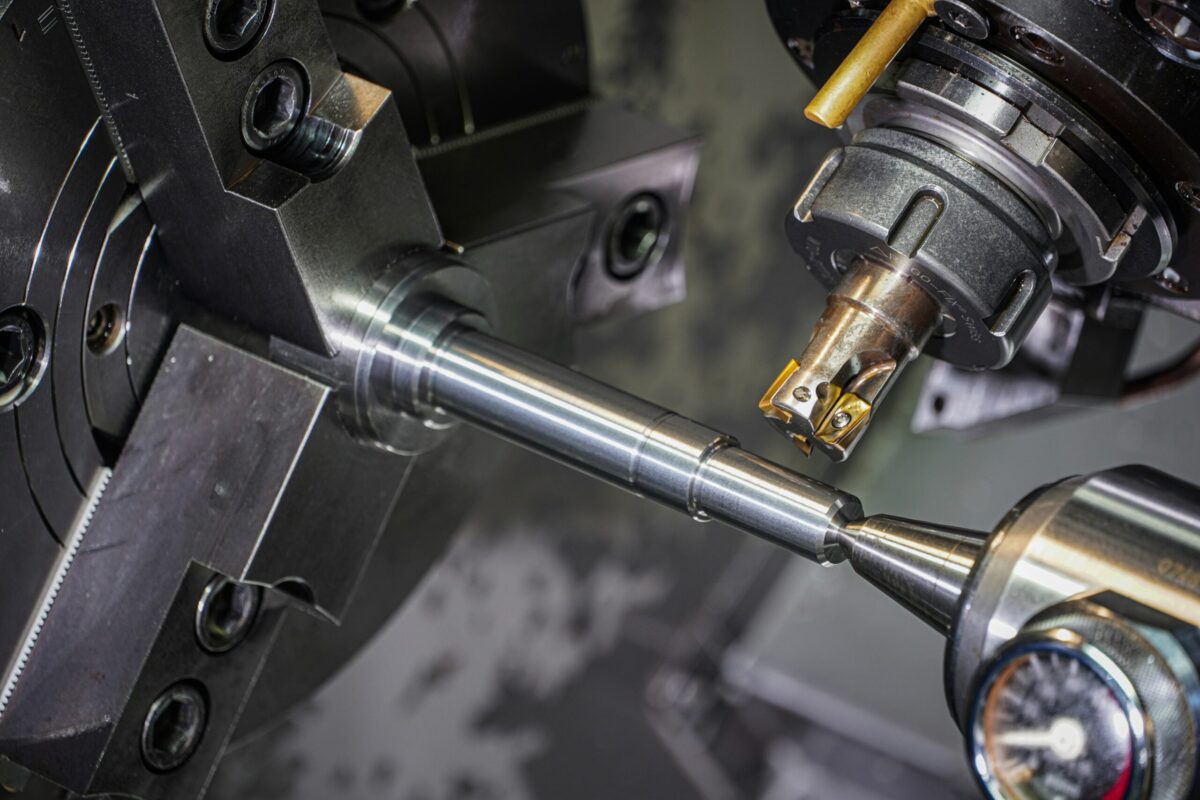
IMAGE: UNSPLASH
The Real Cost Of Downtime Nobody Talks About
Most operations managers know their hourly production rate. Fewer have actually calculated the true cost of unplanned downtime—a number that reaches well beyond lost output per hour.
When a CNC machine goes offline, you’re not just losing parts-per-hour revenue. You’re disrupting labor scheduling, risking missed delivery windows, potentially triggering contractual penalties, and absorbing the administrative burden of sourcing emergency replacements. If that downtime stretches into days because a replacement unit is on backorder, those numbers compound quickly and quietly.
Beyond The Hourly Loss Figure
Industry analysts have long noted that the visible cost of downtime is often just 20 to 30 percent of the total financial impact. The remaining costs are buried in rescheduled shifts, overtime premiums, raw material waste from incomplete runs, and quality failures that surface when lines restart under pressure.
For manufacturers running Fanuc-controlled equipment—one of the most widely deployed CNC systems in North America—motor faults and servo drive issues are among the most common causes of unplanned stops. When a critical axis faults, timely Fanuc servo motor repair can restore precision and uptime at a fraction of full replacement costs.
That fraction matters enormously. A new servo motor assembly can run $3,000 to $10,000 or more, while a qualified repair often comes in at 40 to 60 percent of that figure—frequently with a faster turnaround than a new unit sitting on allocation with a six-week lead time.
Repair vs Replace: A Decision That Hits The Balance Sheet Hard
The rip-and-replace instinct is understandable. When something breaks, there’s a psychological pull toward something new. New feels certain. New comes with a warranty. New removes the memory of failure from the shop floor.
But new also carries a purchase price, an installation cost, a commissioning timeline, and lead times that can stretch weeks or months depending on supply chain conditions. In a manufacturing environment where component availability remains unpredictable, lead time risk alone can make the new-unit option a very expensive form of certainty.
Too many replacement decisions are made reactively, without running a legitimate repair vs. replace cost analysis. A structured evaluation process—even a simple one—tends to favor repair far more often than gut instinct does, particularly when the machine platform itself is otherwise healthy and has significant productive life remaining.
When Component-Level Repair Makes The Strongest Case
Component-level repair—where a qualified technician diagnoses and restores the failed part rather than replacing an entire unit or system—makes the most compelling financial case in the following situations:
- The machine has significant remaining productive life and the failure is isolated to a single component
- The total repair cost comes in below 50 to 60 percent of new unit pricing
- Replacement units carry long lead times or are on allocation from the manufacturer
- A documented repair pathway exists for the component type in question
This isn’t a blanket argument against ever buying new equipment. There are legitimate cases where aging infrastructure genuinely warrants capital replacement. The point is that the replacement default gets triggered far too early, far too often—and manufacturing margins pay the price.
Proactive Maintenance As A Profit Strategy
The higher-order play isn’t simply “repair when something breaks.” It’s building a maintenance culture that catches component degradation before it causes unplanned downtime. This is where the ROI calculus shifts most dramatically in favor of the maintenance-first approach.
Predictive and preventive maintenance programs have existed for decades in industrial settings, but adoption among small and mid-size manufacturers has been inconsistent. The most common barrier isn’t technical—it’s organizational. When margins are tight, maintenance activities that don’t directly produce revenue get deprioritized. That deprioritization almost always surfaces later, at a much higher price than the maintenance would have cost.
Building A Maintenance Culture That Pays Off
The manufacturers who get the most from their CNC investments share a few consistent habits. They maintain detailed service histories for every machine on the floor. They set component inspection intervals based on run hours rather than calendar dates. And they work with repair partners who can identify wear patterns and flag at-risk components before a hard fault occurs.
On Fanuc-controlled lines specifically, servo motors and spindle drives are prime candidates for scheduled inspection because they carry predictable wear signatures—encoder degradation, bearing wear, winding insulation breakdown—that surface well before a critical failure. Catching these conditions during a planned maintenance window and sending the component for repair costs a fraction of the emergency response that follows an unplanned stop.
The financial comparison is stark. A planned repair executed during scheduled downtime might cost $800 to $1,500 with zero lost production. The same repair executed on an emergency basis adds downtime costs, expedite fees, and labor disruption to that baseline. On a single event, the difference can reach $5,000 to $15,000 or more—and that gap grows every time it happens.
The Sustainability Case For Repair
There’s a third dimension to the repair vs. replace argument that rarely gets enough attention in financial conversations: environmental impact. Manufacturing a new servo motor or CNC drive component consumes raw materials, energy, and logistics resources. When a functional component is repaired and returned to service rather than discarded, that consumption is avoided entirely.
For manufacturers with ESG reporting obligations or sustainability targets—a growing segment, particularly those supplying to automotive and aerospace OEMs—this is not a trivial consideration.
Component repair also keeps specialized industrial knowledge in circulation. Qualified repair technicians develop deep platform expertise that benefits the broader manufacturing ecosystem, and that expertise becomes harder to maintain as original equipment ages and new technicians focus on newer systems. The repair pathway tends to grow more valuable, not less, as a machine platform matures.
Making The Case For A Repair-First Policy
If you’re a maintenance manager or operations leader, you’ve likely already internalized most of these arguments. The harder challenge is often making the case upstream—to finance teams and leadership groups that view maintenance as a cost center rather than a value driver.
The most effective approach is to build a simple, consistent cost-comparison framework. Track downtime events. Document the total cost of each, not just parts, but labor disruption, output loss, and expedite costs. Then compare that figure against the cost of the repair or maintenance activity that could have prevented it.
As manufacturers look for ways to extend asset life and maximize returns on existing equipment, understanding the true value of industrial machinery has become increasingly important. Whether evaluating repair-versus-replacement decisions, supporting financing efforts, or planning capital investments, working with a professional machinery and equipment appraiser can provide the accurate valuations businesses need to make informed decisions. Proper equipment appraisals help organizations align maintenance strategies with long-term financial goals while improving operational efficiency. Over time, the pattern becomes impossible to argue with.
A practical repair-first policy typically includes the following elements:
- A documented repair vs. replace threshold, commonly set at 60 percent of new unit cost
- A pre-approved vendor list for component-level repair with established turnaround benchmarks
- Scheduled inspection intervals tied to machine run hours for high-wear components
- A modest critical-spare inventory covering the highest-failure-risk parts on key production lines
None of this requires a significant investment to get started. A well-maintained service log and a reliable repair partner can operationalize the first three items within weeks. The critical-spare inventory requires some upfront capital but pays for itself the first time it prevents an unplanned production stop.
The Numbers That Don’t Show Up In Purchase Orders
The instinct to replace rather than repair is understandable, but it’s rarely the most rational financial choice. Across uptime, cash flow, and sustainability metrics, component-level repair and proactive maintenance consistently outperform reactive replacement—especially on CNC platforms with long productive lifespans and well-established component ecosystems.
In a manufacturing environment where margins are under pressure and capital is finite, the most valuable ROI numbers are often the ones that don’t appear in purchase orders. They show up in the production hours that didn’t stop, the unplanned costs that never materialized, and the equipment that kept running because someone made a deliberate decision before the fault occurred.
That’s the hidden ROI of industrial repair. And for manufacturers willing to build the systems to capture it, it’s anything but small.
COMMENTS