


What makes a hardware hobby project stop feeling like a proof of concept and start behaving like a product is rarely a single change.
In the case of the Scroll Dial, the turning point was not the prettiest dial, the fanciest bearing, or a slick anodized finish. The real significance here is that successive choices about materials, measurement, and process created a narrow window where a tactile peripheral could be produced reliably at small batch scale.
Most people assume a better material or a smaller tolerance will automatically solve a physical design problem. What actually determines whether this Scroll Dial matters is the interplay of three practical constraints: how you make the body, how you measure and fit round parts, and how you choose bearings to survive the real world.
That insight frames the rest of the story. This article follows the device from a finger-saving hack to roughly 100 adventurous early adopters, highlighting the tradeoffs and the specific technical limits the creator had to cross to make it reproducible.
From Finger Pain To A Product: The First Prototypes
The project began as a quickly hacked proof of concept after the creator literally rubbed a finger raw on a laptop scroll wheel. An early, janky prototype proved the idea: a high-quality external scroll dial can be far more comfortable and precise than a tiny wheel.
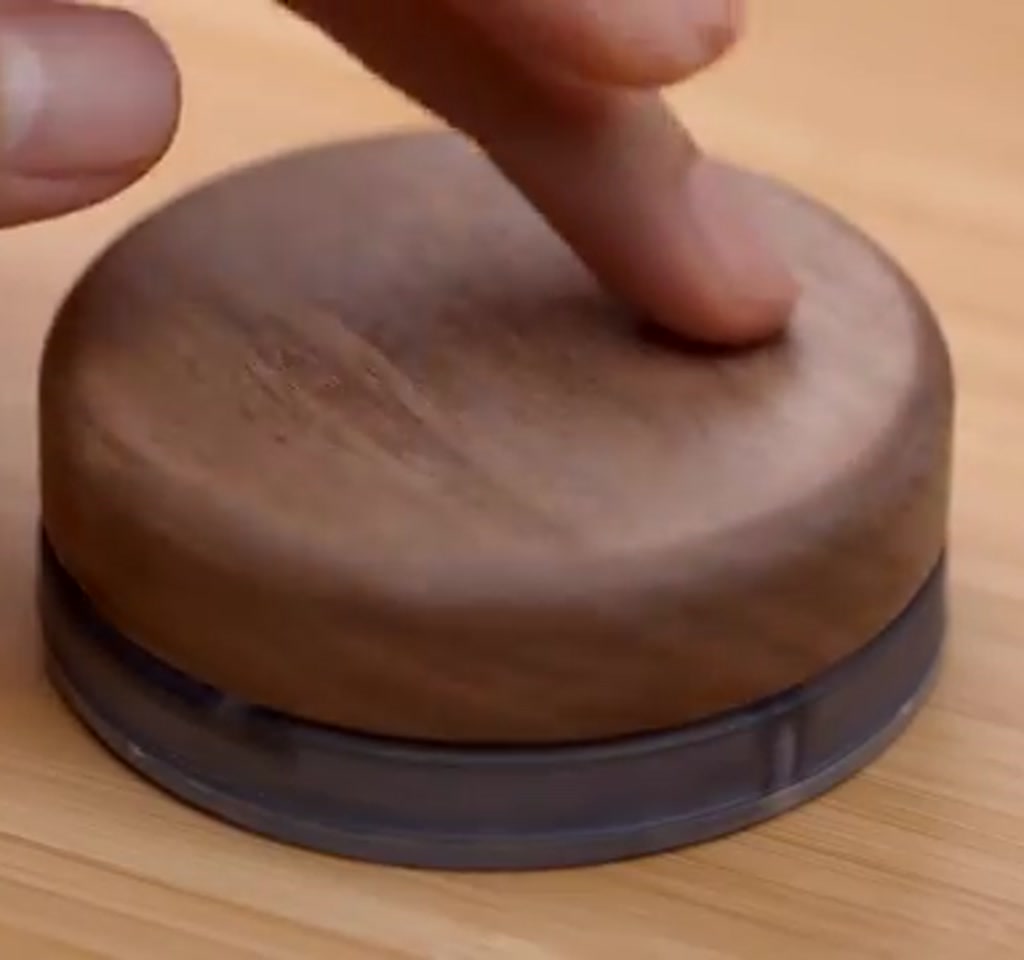
Version two upgraded the parts with premium components, adding a ceramic bearing and an anodized aluminum dial. It felt better but still did not reach a threshold the designer wanted to call premium. Version three turned into a series of material experiments. Stabilized walnut, polycarbonate, and aluminum were all tried.
Up to that point every unit was one of a kind. The transition to a product meant answering a different set of questions. How will parts be made repeatedly with consistent dimensions? How will fragile materials perform in the hands of real users? And what does it cost in time and labor to get each unit to a surface finish and tolerance that looks premium?
Moving from a finger-saving prototype to a small run required shifting focus from form experiments to repeatable processes. The maker had to treat the dial as a system where each decision handed a measurable input to the next step in manufacturing.
Printing Choices And The Post-Processing Workaround
Choosing how to make the body is both a material decision and a production decision. The Scroll Dial started with resin for surface finish, moved to FDM to solve brittleness, and landed on a hybrid print then mill approach to balance speed, cost, and cosmetic quality.
Why Resin Fell Short
Resin offered fine detail but created two production problems. First, the printed parts needed heavy post-processing to hit dimensional targets. Second the material was brittle. Even with careful finishing, the parts tended to crack or behave unpredictably under mechanical stress.
Those constraints are concrete. For a part meant to survive handling and repeated assembly, brittleness is a limit you cross only by changing materials or changing the structural design to avoid stressed thin walls.
FDM Surface And Warp Tradeoffs
The project moved to FDM printing on a Bambu Lab H2D. That enabled multi-material prints using PETG for the body and PLA as sacrificial supports. PLA does not adhere to PETG, which allows supports to be printed with zero clearance and popped off cleanly. The waste is a tradeoff the designer accepted to get manufacturability.
FDM solved brittleness but introduced visible layer lines, seam marks, and warping along thin walls and intended sharp corners. Printing at very small layer heights, for example 0.08 mm versus a typical 0.2 mm, does improve surface finish but comes at a measurable time cost. In practice going from 0.2 mm to 0.08 mm multiplies the number of layers by about 2.5 times, and print time tends to increase by a similar multiple depending on infill and travel moves.
Print Then Mill Workflow
Rather than chase perfect prints, the maker printed slightly oversized parts and finished them on a CNC mill. Milling corrected warpage and removed visible layer artifacts, but it required consistent print solidity and careful toolpaths to avoid introducing new geometry errors.
To succeed the print settings needed higher wall line ratios so the CNC cutter had clean material to remove, and the workflow required many iterations to dial in consistent overhangs and wall fill before milling could be trusted for cosmetic correction.
Metering Tolerances And The Shrink Fit Gamble
The aluminum dial was designed to look seamless, with no screw holes. The plan was for the dial to shrink fit onto 52 mm ceramic bearings. The maker attempted a thermal shrink fit by heating the aluminum dial to roughly 140 degrees Celsius so the metal would expand and allow the bearing to drop in.
That is where metrology became the limiting factor. The dial measured about 51.9 mm just out of the machine, while the specified ceramic bearing diameter was 52.0 mm. The designer had originally specified an inner diameter of 51.95 mm, with a tolerance of around 25 microns. Holding that kind of tolerance on an anodized surface is non-trivial.
Missing the tolerance by 0.05 mm, or 50 microns, is small to the eye but decisive for a shrink fit. The bearings bound up rather than sliding into place. This is an exact example of a threshold. A few tens of microns decide whether a design assembles by hand or becomes scrap.
Probing Lobing And CNC Limits
Without a coordinate measuring machine the maker relied on calipers and a ball gauge. Those instruments are useful, but the project pushed beyond their comfortable range of confidence. Digital calipers are typically repeatable to about 20 microns when used carefully, and a ball gauge provides a quick check but not institutional-grade certainty.
Attempting to solve the undersized pocket with a hobby CNC created another class of constraints. The router used for trimming is not extremely rigid, so cuts had to be very light. More importantly, the probing routine used to find the center suffered from probe pre-travel variation, a phenomenon known as lobing.
The maker addressed probe error by writing a custom routine that captured many points around the rim with probe rotation, and then ran a Kanatani Hyper Least Squares circle fit. The robust 256-point probe sequence reduced error but at a significant time cost, and the project still found residual geometry shifts that pointed to the limits of the hobby machine.
After repeated attempts the practical fix was pragmatic: hire a professional with a rigid machine for a single precision pass. Outsourcing that one operation eliminated accumulated errors and saved the project from endless in-house tweaks.
Electronics And Production Scaling
Electronics work moved the Scroll Dial into clearer product territory when the PCB switched from an NRF52832 to an NRF52833, enabling USB-C for data and high-resolution scrolling over both Bluetooth and USB. That change required antenna re-tuning to preserve wireless performance.
Rather than treat RF tuning as a hobby experiment the designer had Nordic produce an antenna tuning report and implemented the recommendations. This is a recurring theme: small, specialist tasks are frequently cheaper and faster to outsource than to learn in depth while also finishing a product.
Tooling That Reduced Human Friction
Assembly benefited from modest tooling investments: a screw presenter, an automatic screwdriver with adjustable torque, and automatic tape dispensers. These items reduced repetitive strain and error without committing to full automation, although flex cable insertion remained a finicky manual step.
Practically, a single operator can assemble a few dozen units per day with modest automation. Pushing toward hundreds amplifies the cost of remaining manual tasks, which is why the maker chose incremental tooling rather than immediate full-scale automation.
Ceramic Bearings Vs Greased Stainless Bearings
Choosing bearings proved to be a product decision as much as an engineering one. Ceramic bearings maximize spin and responsiveness but are sensitive to dust and can be audible. Greased stainless bearings trade raw spin for a quieter, more tolerant, and lower-maintenance experience.
Spin And Sensitivity
Ceramic bearings run dry and offer minimal friction, producing a light, high-spin experience that highlights fine scrolling resolution. That performance advantage is measurable, but it leaves the device more sensitive to contamination and slight internal clearances that affect feel and noise.
Noise And Maintenance
Greased stainless bearings are quieter and damped by design. The grease prevents ball rattle and reduces sensitivity to dust, giving users a controlled feel that many preferred during everyday use. The project shifted toward greased stainless as a default while keeping ceramic as an option.
Assembly Tools Human Friction And Small Batch Reality
Scaling a tactile device to a small run meant accepting that some work remains manual. Pressing in bearings and silicone feet, peeling tape backing, and inserting flex cables are dexterous tasks that either need more tooling or a different design approach.
The editorial lesson is practical: the moments where a project stops being a hobby are often operational rather than design-based. Investing in a professional CNC pass, antenna tuning, or a screw feeder trades engineer time and uncertainty for predictable cycle time and reproducible quality.
What This Reveals About Small-Batch Hardware
The Scroll Dial story highlights three durable constraints designers face when moving from one-off builds to small-scale production: dimensional tolerance thresholds, the tradeoff between process time and surface quality, and bearing choice as a use case constraint. Each shapes assembly cost and the user experience.
- Dimensional Tolerance Is A Threshold Constraint. A few tens of microns separate a working shrink fit from a bound-up bearing. The practical range in this project was within 25 to 50 microns of error and that was decisive.
- Process Time Versus Surface Quality Is A Resource Constraint. Printing at 0.08 mm layer height improved finish but increased print time by roughly a factor of 2.5 when compared to 0.2 mm. The alternative was print oversize then mill, which trades material and machine time against finishing labor.
- Bearing Choice Is A Use Case Constraint. Ceramic bearings win in spin and feel but lose in contamination tolerance and noise. Greased stainless offers long-term robustness and a quieter, damped feel that many users will prefer in everyday environments.
These are not failures. They are boundaries that shape product decisions. Where you choose to sit inside those boundaries directly determines the product experience, the assembly cost, and the maintenance expectations of users.
Who This Is For And Who This Is Not For
Who This Is For: Makers and small hardware entrepreneurs who value tactile quality and are comfortable investing in modest outsourcing for precision steps. Developers who need a tactile peripheral with options for both high spin and low maintenance operation will find the Scroll Dial approach informative.
Who This Is Not For: Teams seeking immediate mass production without iteration, or builders who cannot accept hands-on assembly and incremental tooling. If you need instantly scaleable, fully automated production with zero manual insertion, this small batch path may not be the right fit yet.
Forward Looking Thresholds And The Remaining Puzzle
The Scroll Dial is a case study in sequencing decisions: materials, measurement, and selective outsourcing. The unresolved tension is whether design changes or process automation can eliminate the remaining manual assembly steps without dulling the tactile nuance that made the original hack compelling.
If the maker continues iterating, the next threshold will be reducing assembly time per unit from hours down to tens of minutes while preserving feel. That challenge remains open and worth watching.
FAQ
What Is The Scroll Dial? The Scroll Dial is an external tactile scrolling peripheral born from a hobby hack intended to relieve finger pain from tiny laptop wheels. It evolved through prototypes into a small-run product by solving materials, measurement, and assembly constraints.
Why Did Resin Fail For Production? Resin parts offered excellent surface finish but presented brittle behavior, heavy post-processing, fragile supports, and a persistent smell. Those factors made resin impractical for repeatable small batch production in this project.
How Did FDM And CNC Work Together? The maker printed slightly oversized parts on FDM to avoid brittleness, then finished them on a CNC mill to correct warpage and layer artifacts. This print then mill workflow traded printing time for a dependable cosmetic and dimensional result.
What Went Wrong With The Shrink Fit? The shrink fit failed because metrology and manufacturing variances left the aluminum pocket about 0.05 mm undersized relative to a 52.0 mm ceramic bearing. Small micron-level errors decided whether bearings installed smoothly or bound up.
Are Ceramic Bearings Better Than Greased Stainless? Ceramic bearings offer higher spin and lower friction but are sensitive to dust and can be noisier. Greased stainless bearings are quieter, more tolerant of contamination, and provide a damped feel preferred by many daily users.
Which Microcontroller Does The Scroll Dial Use Now? The device moved from an NRF52832 to an NRF52833, enabling USB-C data connectivity and high-resolution scrolling over Bluetooth and USB. Antenna retuning was implemented with a professional report from Nordic.
How Many Units Can Be Assembled Per Day? With modest automation a single operator can assemble a few dozen units per day. Pushing production toward hundreds highlights the cost and time impact of remaining manual tasks like flex cable insertion and bearing pressing.
Can The Assembly Be Fully Automated? It is uncertain. The transcript indicates the next threshold is whether design tweaks or automation can reduce assembly time without harming the tactile quality. That remains an open engineering challenge.
COMMENTS