


Ideas vanish faster than coffee cools. That is why the Parlor Node matters right now. It reframes capture as a brief, low-friction interaction rather than a detour through a phone that will inevitably pull you into other apps.
The real significance here is not simply that the device records audio or that it uses an E Ink screen. What actually determines whether this matters is the combination of low power, minimal attention, and searchable output. By pairing a frugal microcontroller with a display that only drinks power when it changes, and by outsourcing transcription to Whisper, the device turns fleeting thoughts into persistent, discoverable artifacts.
Most people assume the challenge is hardware. In practice the hard problem is the human workflow. The creator of this project designed the Parlor Node around reducing cognitive overhead: wake, capture, tag, sleep, and only later sync for transcription. That workflow is the product, and the hardware exists to serve it.
What becomes obvious when you look closer is how design choices redistribute tradeoffs. The device sacrifices constant connectivity and high refresh speed for focus, battery life, and physical simplicity. Those are deliberate limits that make the idea useful in specific contexts.
How The Hardware Maps To A Second Brain
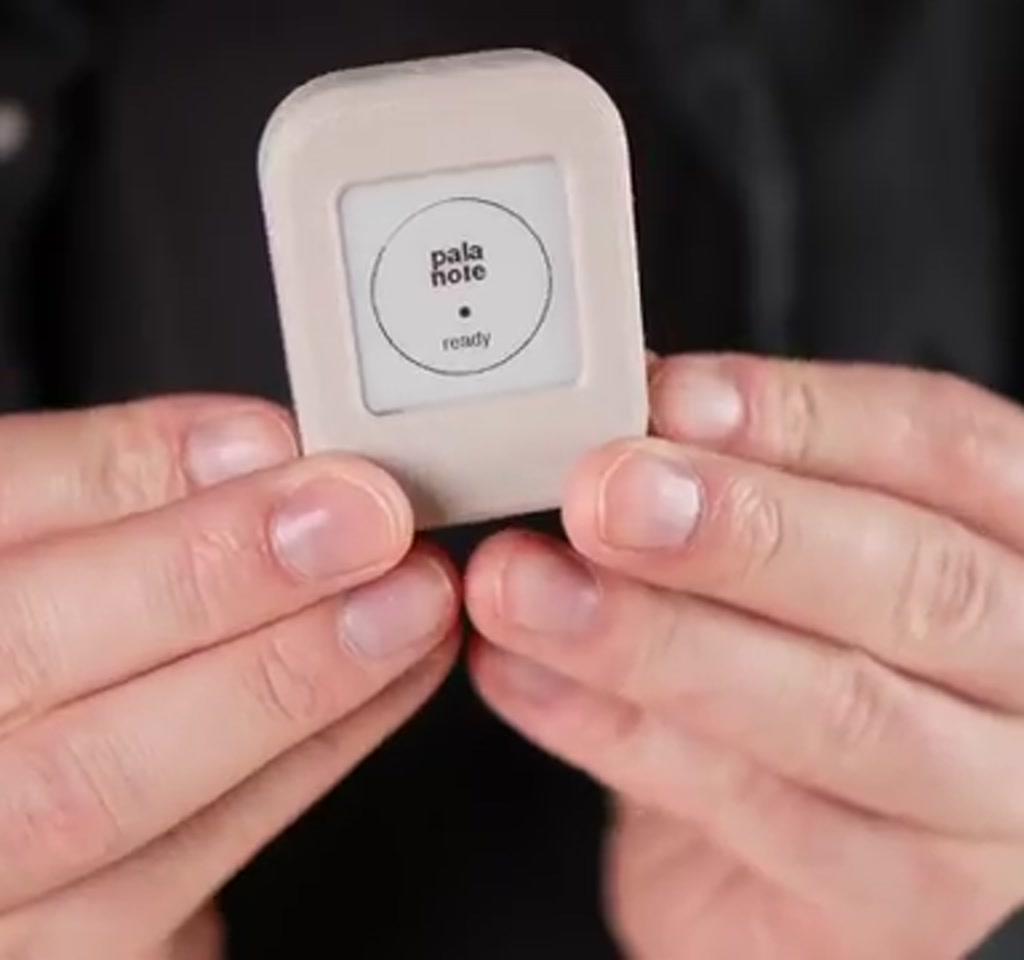
At a glance the Parlor Node is a compact capture device built from familiar parts: an ESP32 controller, an E Ink display for persistent feedback, a microphone and speaker for capture and confirmation, SD card storage for local files, and a LiPo battery for power. Together these elements prioritize low attention and long idle life over continuous connectivity.
The ESP32 is a pragmatic pick. It brings Wi Fi and Bluetooth and enough compute headroom to run the device logic while staying power efficient during long idle periods. It does not have the processing headroom to run modern speech transcription locally, which is precisely why the system treats transcription as an occasional network task rather than a continuous background service.
The E Ink display is the behavioral lever. Because it only consumes power when updating, information can remain visible almost indefinitely without battery cost. That persistence encourages glanceable, calm interactions rather than the attention-drawing stimulus of a glowing phone screen.
How Parlor Node Works – Capture, Tag, Sync
Capture starts with a long wake press, recording only while a button is held, followed by an immediate tag selection and a return to sleep. Notes are stored as audio on the SD card, later uploaded for transcription when the device connects to Wi Fi and a Whisper-enabled service. This sequence keeps interactions measured in seconds and reduces decision friction.
Capture Flow
Recording begins while the button is held, enforcing brevity and preventing accidental long recordings. On release the device plays an audible confirmation and offers a tag menu so the user can add metadata immediately. These tags make later retrieval practical and the local audio preserves the original source for future processing.
Transfer Mode And Web Interface
The Parlor Node exposes a local transfer mode that displays a local IP address on the E Ink screen. Entering that address into a browser opens a minimal web interface where notes can be browsed, filtered by tag, downloaded as text, or exported as audio files. This keeps ownership local while enabling exports to workflows like Notion or Obsidian without mandatory cloud persistence.
Whisper Transcription And The Cloud Tradeoffs
Transcription is handled off-device using OpenAI Whisper. Users add Wi Fi credentials and an API key to the firmware so recordings upload and are transcribed when the unit syncs. This design defers heavy processing to the cloud, trading immediate local text for lower hardware cost and longer battery life.
Two tradeoffs define the experience. First, transcription is deferred by default, with automatic sync typically once per day or via manual trigger. That introduces a synchronization window and potential latency up to the configured interval. Second, the device performs network bursts rather than maintaining constant connectivity, which preserves battery but requires patience from anyone expecting instant text.
Design Choices, Constraints, And Tradeoffs
The Parlor Node prioritizes pocketability and simplicity: a 500 milliamp-hour LiPo keeps the device compact but limits continuous active time, so firmware relies on deep sleep to extend battery life. These are conscious tradeoffs that favor short, frequent interactions over all-day heavy use.
Offloading transcription keeps hardware simple and cost low, but it introduces API usage and network dependency. Transcription costs and data usage rise with recording length and frequency, so heavy users will see operating costs grow. Balancing battery, cost, and immediacy is the design boundary that shapes where the device fits.
Case And Assembly Tradeoffs
The snapping case is designed for easy 3D printing and community modification. That reduces assembly friction and encourages forks, but it limits modularity and ruggedness compared to screw-fastened enclosures. The design intentionally favors approachable maker-friendly construction over military-grade durability.
Parlor Node Vs Smartphone Voice Notes
Put simply, the Parlor Node trades the smartphone’s always-on convenience for a focused, low-distraction capture ritual. Smartphones offer immediate transcription, cloud sync, and richer interfaces, but they also invite distraction and drain attention. The Parlor Node is a single-purpose capture tool that reduces friction around the moment of capture by removing the phone from the equation.
Where Parlor Node Excels
It excels at preserving the capture moment with minimal attention cost: quick wake, record, tag, sleep. Persistent E Ink feedback and local audio storage mean notes feel less ephemeral and more discoverable once transcribed.
Where Smartphones Still Win
Phones win on immediacy, richer search, and integrated cloud services with instant transcription. If your workflow requires instant searchable text or constant sync across devices, the Parlor Node’s deferred transcription and occasional sync windows will feel limiting.
Community, Extensibility, And Practical Limits
The project is intentionally open. Firmware, assembly files, and instructions are available from the developer’s Ko Fi, which allows builders to replicate and modify the device. With server-side transcription, the community can add features like summarization, automatic titles, and daily digests without changing the hardware.
Practical limits remain: E Ink’s slow refresh forces brevity in UI, constrained battery choices limit continuous active time, and transcription features depend on API access and bandwidth. These are not accidental limitations but design boundaries that will shape how the community extends the device.
Why This Matters Beyond The Gadget
The Parlor Node reframes where intelligence lives in a capture workflow: local, human-centered capture paired with on-demand cloud processing. That hybrid pattern highlights tradeoffs between attention, privacy, cost, and immediacy and suggests a template for future pocket tools that aim to augment human memory rather than compete for attention.
Two tensions remain open. One is immediacy versus battery and cost, which the deferred transcription model leaves unresolved for users who need instant text. The other is privacy versus convenience: uploading audio for transcription keeps local capture simple but hands metadata and audio to external services. Those tensions are intrinsic to the architecture and will be negotiated differently by each community fork.
Who This Is For And Who This Is Not For
Best For: People who prioritize low-distraction capture, want a physical, pocketable way to record fleeting thoughts, and accept deferred transcription in exchange for longer battery life and simpler hardware.
Not For: Users who require immediate cloud transcription, continuous device sync, or military-grade ruggedness. If you need instant searchable text across devices, a smartphone or a heavier-duty solution will be a better fit.
Next Steps And What To Watch
Watch how community forks add server-side features like automatic titles, summaries, and integration scripts for Notion and Obsidian. Also watch how different forks negotiate battery size, case design, and optional local processing as hardware options evolve.
FAQ – Frequently Asked Questions
What Is Parlor Node?
The Parlor Node is a compact capture device built around an ESP32 microcontroller, an E Ink display, a microphone and speaker, SD card storage, and a LiPo battery. It focuses on quick voice capture, immediate tagging, and deferred Whisper transcription for searchable notes.
How Does Parlor Node Transcribe Notes?
Recordings are uploaded to a Whisper transcription service when the device connects to Wi Fi using credentials and an API key stored in the firmware. Transcription is performed off-device, and text appears after the configured sync runs.
Can You Use Parlor Node Offline?
Yes. Captures and tagging happen entirely offline and are stored locally on the SD card. Transcription and cloud-based features are optional and occur when the device connects to Wi Fi.
How Do I Transfer Notes From The Device?
Enable transfer mode to display a local IP address on the E Ink screen. Enter that address into a browser to open a minimal web interface where audio files and transcribed text can be browsed, filtered by tag, downloaded, or exported.
How Long Does The Battery Last?
The default device ships with a 500 milliamp-hour LiPo to keep the unit compact. Firmware relies on deep sleep to extend idle life, and the design targets many days of light, short-interval use rather than long continuous recording. Exact runtimes depend on use patterns.
Does Parlor Node Protect My Privacy?
Capture is local by default, but transcription requires uploading audio to a Whisper-enabled service using a user-provided API key. Privacy depends on the chosen transcription endpoint and account settings; the architecture keeps ownership local until the user opts into sync.
How Much Does Transcription Cost?
Transcription costs scale with recording length and frequency and depend on the chosen Whisper plan or API pricing. The project notes that heavy users may see costs rise into tens or hundreds of dollars over time, but exact amounts depend on individual usage and vendor pricing.
Can I Export Notes To Notion Or Obsidian?
Yes. The local web interface and the exportable text format make it straightforward to move notes into personal knowledge managers such as Notion or Obsidian without forcing cloud dependence.
Related reading on Bit Rebels might explore other E Ink experiments and tools that favor focused capture. The source files and firmware are linked on the developer’s Ko Fi for anyone who wants to build, fork, or iterate on the design.
COMMENTS