


In precision manufacturing, a component can meet its drawing specifications and still create problems once it becomes part of a larger assembly. This is one of the reasons tolerance stack-up matters so much in modern production.
A small dimensional variation on a single part may appear harmless, but when several components are assembled together, those variations can accumulate and affect fit, motion, sealing, alignment, load distribution, or long-term reliability.
For manufacturers working with precision components, this issue is especially important. Turned parts are often used as pins, bushings, inserts, shafts, connectors, fittings, sleeves, contacts, fasteners, and other small mechanical elements that must interact with surrounding parts. Their size may be modest, but their impact on the final product can be substantial.
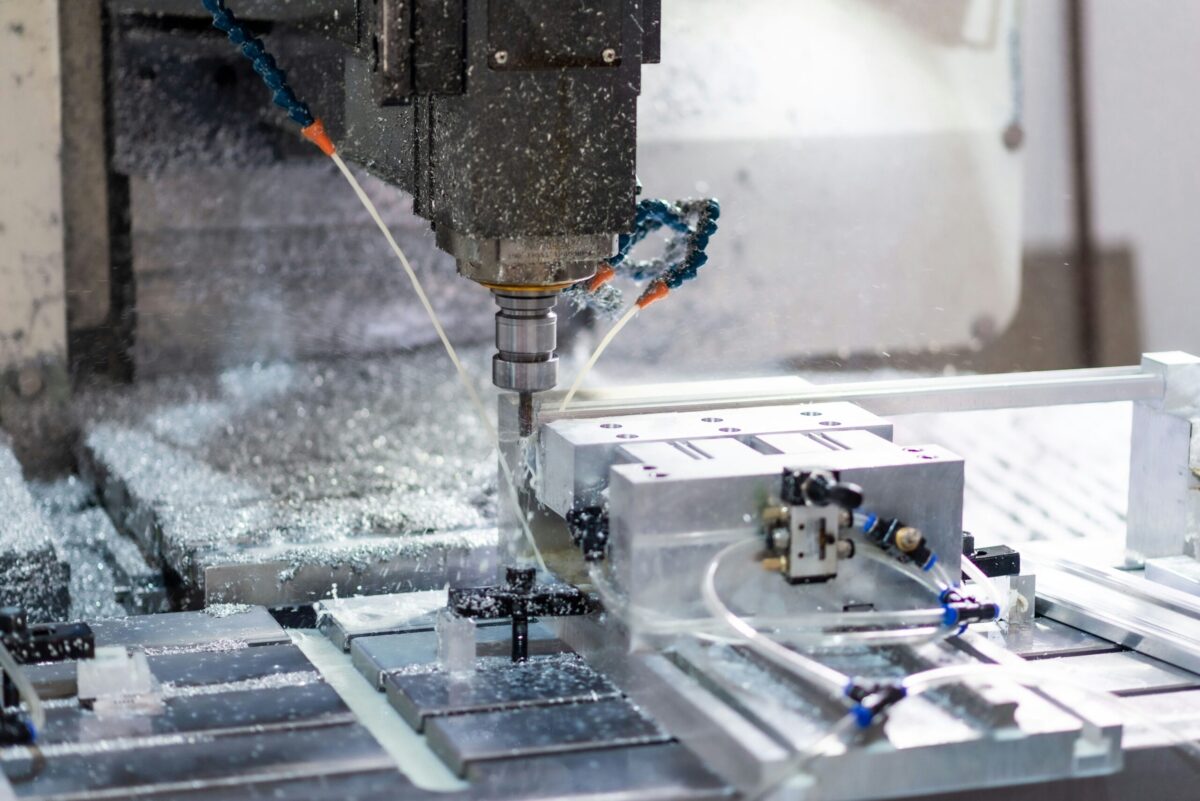
IMAGE: UNSPLASH
Why Small Variations Become Big Assembly Problems
Every machined component has an allowable range of variation. A diameter, length, groove, thread, chamfer, or shoulder may be designed with a specific tolerance so the part can be produced efficiently without sacrificing function. In isolation, each dimension may fall within the approved range.
The challenge begins when multiple parts, each with its own tolerance range, must work together. If every part lands near the same upper or lower limit, the combined effect can shift the entire assembly away from its intended performance. This is the basic idea behind tolerance stack-up.
In some applications, the result may be a minor fit issue. In others, it can lead to vibration, excessive friction, leakage, premature wear, poor electrical contact, misalignment, or assembly delays. For high-volume production, even a small percentage of problematic assemblies can create significant cost, scrap, and rework.
The Difference Between Part Tolerance And Assembly Performance
A drawing tolerance defines what is acceptable for a single component. Assembly performance, however, depends on how all parts behave together. This distinction is critical for engineers, purchasing teams, and quality managers.
A part may be technically compliant but still contribute to an unstable process if its dimensions vary too widely from batch to batch. This is why manufacturers often look beyond simple pass-or-fail inspection. They need to understand process capability, repeatability, dimensional trends, and how closely production stays centered around the nominal value.
For example, a turned shaft may fall within its diameter tolerance, but if it consistently trends toward the maximum limit, it may create press-fit problems when paired with a mating bore that also trends tight. Neither component is “wrong” on paper, but the assembly may still become difficult, inconsistent, or unreliable.
Where Tolerance Stack-Up Appears In Real Production
Tolerance stack-up can appear anywhere parts must align, rotate, slide, seal, conduct, lock, or transmit force. It is common in automotive assemblies, industrial equipment, electronic hardware, medical devices, fluid control systems, and precision instruments.
In a mechanical linkage, small differences in pin diameter or hole location may affect movement. In a valve or fitting, dimensional variation may influence sealing performance. In an electrical connector, the geometry of a turned contact may affect insertion force or conductivity. In a compact device, stacked tolerances can make assembly slower or increase the risk of cosmetic and functional defects.
These problems are not always visible during incoming inspection. Sometimes they appear only during final assembly, endurance testing, field use, or after production volumes increase. That is why tolerance analysis should not be treated as a late-stage quality task. It belongs at the intersection of design, sourcing, machining, and production planning.
Why Repeatability Matters In High-Volume Turned Parts
For high-volume manufacturing, repeatability is often more valuable than occasional perfection. A supplier that produces one excellent batch but struggles to maintain consistency can create hidden risk for the customer. Stable, repeatable output helps downstream teams plan assembly processes, reduce inspection burden, and maintain predictable product performance.
In turned parts production, repeatability depends on several factors: machine stability, tooling condition, material behavior, bar stock quality, coolant management, process monitoring, operator expertise, and inspection strategy. Even when machines are highly automated, small changes in tool wear or material batches can influence final dimensions.
This is why part-to-part consistency is essential. The goal is not simply to produce parts within tolerance. The goal is to produce parts that remain dimensionally stable across runs, lots, and delivery schedules. When consistency improves, assembly teams spend less time adjusting, sorting, reworking, or troubleshooting.
The Role Of Supplier Communication In Reducing Dimensional Risk
Tolerance stack-up is easier to manage when suppliers understand how a component functions inside the final assembly. A drawing may define dimensions, but it does not always explain which features are most critical to performance. Two dimensions may have similar tolerances, yet one may be far more important for fit, sealing, or movement.
For companies that rely on compact mechanical assemblies or high-volume production, working with a precision turned parts supplier can help align component geometry, production repeatability, and assembly requirements from the earliest stages of sourcing.
This communication can include reviewing critical-to-quality features, identifying dimensions that influence mating parts, clarifying inspection methods, discussing material behavior, and evaluating whether tolerances are realistic for the chosen process. When suppliers and engineering teams share this information early, it becomes easier to avoid unnecessary cost and reduce dimensional risk.
Designing For Consistency, Not Just Compliance
A strong design does more than specify tight tolerances. It defines which tolerances truly matter and allows practical manufacturing variation where possible. Overly tight tolerances can increase cost without improving performance, while loose or poorly assigned tolerances can create assembly instability.
Good tolerance strategy considers the full system. Engineers may use tolerance analysis, statistical process data, prototype feedback, and production history to understand how variation moves through the assembly. Purchasing teams can support this process by selecting suppliers based on capability, communication, and consistency, not only unit price.
Quality teams also play a key role. Inspection data should not simply confirm whether parts passed or failed. It should reveal trends, drift, and process behavior over time. This allows teams to act before a dimensional issue becomes an assembly problem.
Precision Is A System, Not A Single Measurement
The performance of a finished product depends on more than the accuracy of individual parts. It depends on how those parts interact under real production and operating conditions. Tolerance stack-up is a reminder that precision is not just a number on a drawing. It is a system of decisions involving design, machining, inspection, communication, and assembly.
For manufacturers, the benefit of managing dimensional variation is clear: fewer production interruptions, better fit, lower scrap, more predictable quality, and improved reliability in the field.
Small components may not always be visible in the final product, but they often carry a large share of its mechanical responsibility. When their dimensions are consistent and their role in the assembly is well understood, the entire product becomes easier to build, test, and trust.
COMMENTS